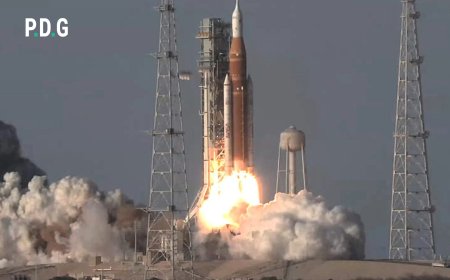

Artemis II: Humanity’s First Crewed Journey Around the Moon in Over 50 Years
Discover Artemis II, NASA’s historic mission sending astronauts on a crewed journey around the Moon. Learn about the Orion spacecraft, the Space Launch System, and how this mission paves the way for future lunar exploration and deep-space travel

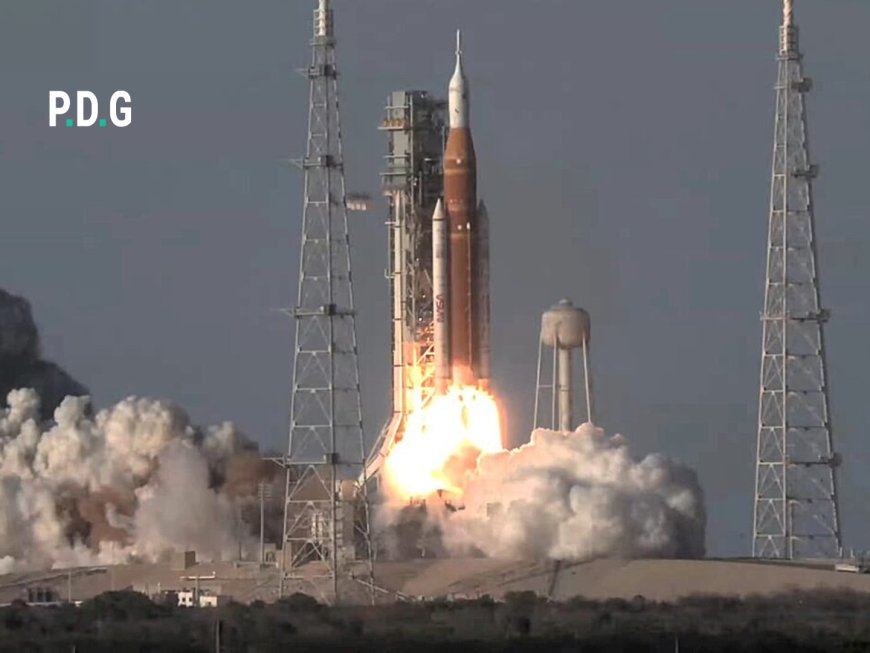
Artemis II: NASA’s Historic Human Journey Around the Moon
On April 1, 2026, NASA launched the groundbreaking Artemis II mission, sending four astronauts on a remarkable voyage around the Moon. This mission marks the first time humans have left low Earth orbit in over half a century, signaling a new era in space exploration and setting the stage for humanity’s eventual return to the lunar surface and beyond.
A Bold Step in Human Space Exploration
The crew lifted off from NASA’s Kennedy Space Center in Florida aboard the Space Launch System (SLS), one of the most powerful rockets ever built. Inside the Orion spacecraft, the astronauts are embarking on a 10‑day journey, circling the Moon before returning safely to Earth.
Unlike a landing mission, Artemis II focuses on testing critical systems while humans are on board. It is the first crewed mission of the Artemis program, a long-term initiative by NASA to establish sustainable human presence in lunar orbit and on the Moon itself. The mission represents a major milestone—the first human journey beyond Earth orbit since Apollo 17 in 1972.
Meet the Crew
The Artemis II team is made up of four astronauts:
- Reid Wiseman – Commander, NASA
- Victor Glover – Pilot, NASA
- Christina Koch – Mission Specialist, NASA
- Jeremy Hansen – Mission Specialist, Canadian Space Agency (CSA)
This diverse crew represents multiple historic firsts: the first woman (Christina Koch) and the first Black astronaut (Victor Glover) to venture beyond low Earth orbit, and the first non‑U.S. astronaut (Jeremy Hansen) to join a lunar mission. These milestones highlight global cooperation and inclusivity in modern space exploration.
Why Artemis II Is So Important
Many may wonder why humans are returning to lunar orbit rather than landing immediately. Here’s why this mission matters:
1. Testing Life in Deep Space
Artemis II serves as a high-stakes test flight. It evaluates essential spacecraft systems including life support, navigation, communication, and temperature regulation under real deep-space conditions. The results will ensure the safety of astronauts for future missions to the Moon and eventually Mars.
2. Pushing the Boundaries
This mission will take humans farther from Earth than ever before. By venturing into deeper space, scientists can observe how the human body and spacecraft systems handle extreme cosmic conditions—a vital step toward long-duration space travel.
3. Inspiring Future Generations
Artemis II isn’t just a technological feat—it’s a source of inspiration. Watching humans journey beyond Earth rekindles curiosity and wonder in young minds, motivating the next generation of scientists, engineers, and explorers.
4. Global Collaboration
With the Canadian Space Agency participating directly, and other international partners contributing expertise, Artemis II emphasizes that space exploration is a cooperative human endeavor, transcending borders.
Building a Lasting Legacy
The Artemis program, named after Apollo’s twin sister in Greek mythology, aims to extend humanity’s reach in space. Unlike Apollo’s short Moon visits, Artemis envisions long-term human presence, including lunar orbit stations and permanent outposts for research, resource utilization, and future commercial activity.
Artemis II is a crucial stepping stone toward these ambitions, bridging the gap between early lunar landings and a future where humans may live and work in deep space for extended periods. Lessons learned from this mission will improve spacecraft design, refine astronaut training, and reduce risks for subsequent expeditions.
Looking Ahead
If Artemis II achieves its objectives, NASA will be ready to advance to Artemis III, the first mission to land humans on the Moon in the modern era—including the first woman and first person of color to walk on the lunar surface. Long-term goals include sustainable lunar bases and preparation for human missions to Mars.
Challenges and Risks
Exploring deep space is inherently risky. Artemis II faces challenges such as exposure to cosmic radiation, the harsh thermal environment, and the reliability of life-support systems. NASA has applied lessons from prior missions, including the uncrewed Artemis I test flight, to enhance safety and reliability.
While confidence is high, space exploration always carries uncertainty. Each milestone achieved helps engineers and scientists prepare for even more ambitious missions.
A Historic Moment
As the Orion spacecraft ascends into orbit, millions around the world witnessed a defining moment in human history. Artemis II is more than a mission—it represents humanity’s renewed ambition to explore the unknown, continuing a tradition of curiosity and discovery that has defined civilization for centuries.
When the crew safely returns after approximately ten days, the world will have taken another giant leap, not just for NASA or its partners, but for all of humanity.
What's Your Reaction?